


What if home isn’t a place at all?
Not something we find, but something we remember.
Something that’s been quietly waiting inside us all along.
This piece is for anyone who’s ever felt lost, disconnected, or quietly searching for a sense of belonging — not just externally, but from within.
There are places in the world that feel like home the moment we arrive. To me, home isn’t really a place at all. It’s a feeling — a breath — a way of being in the world. Any place can feel like home, if we let it.
Somewhere along the way, it becomes clear that real belonging doesn’t begin in a city, a house, or even in the presence of others. It begins from within. It begins when presence becomes a practice.
When compassion is directed inward. When the search for home turns inward, and the body becomes our sanctuary.
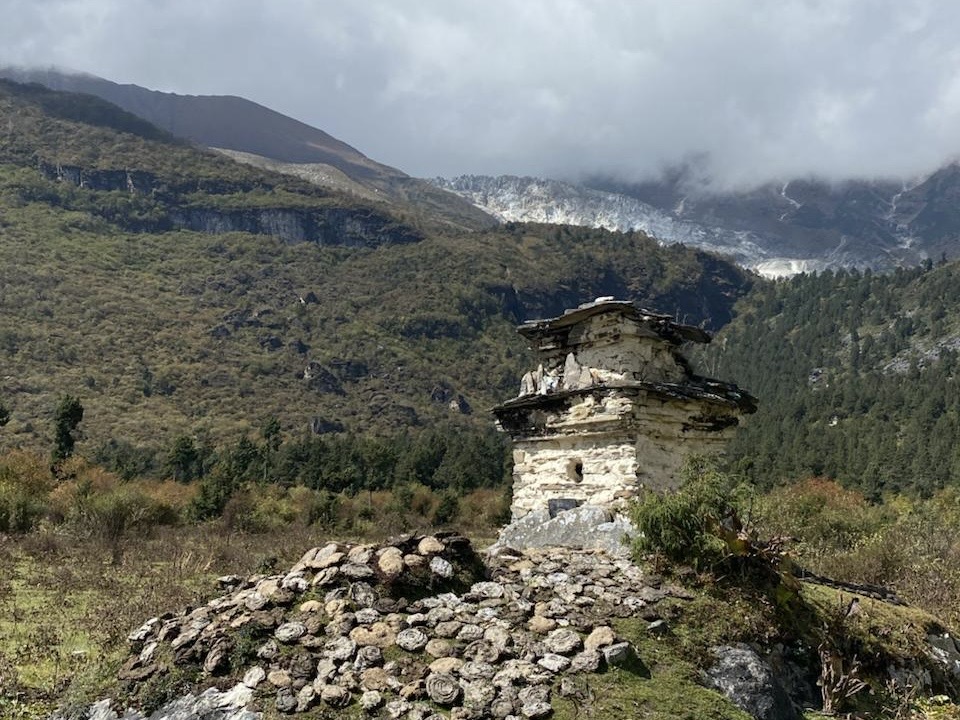
Once, a Buddhist monk in the hills of Kathmandu told me to see myself as a temple — not in a grand, distant way, but as a quiet, practical truth. Just like the stupa, built stone by stone from the ground up, we build our inner home slowly. We choose what stays, what goes, and what needs more time before it’s ready to be touched. Sometimes that means dismantling entire rooms built out of old beliefs, clearing the dust of inherited fear and judgment, and choosing softness where there was once only survival. This process doesn’t demand perfection. It asks for honesty. For patience. For the willingness to meet ourselves with an open heart and say: I really want to know you better.
Yogic philosophy speaks to this through “Svadhyaya”, which means self-study. In Buddhism, the mandala reflects something similar: the sacredness of inner structure and harmony. What may seem decorative or symbolic is often just a mirror of the journey within — the slow, intentional work of understanding ourselves and returning “home” to our real selves.
With time, that inner space begins to feel more stable. Groundedness doesn’t come because life suddenly gets easier — it comes because we’ve created a place within ourselves to return to. A center. A stillness. And from that stillness, a quiet strength begins to radiate outward.
I also learned and I still am, that hiding out of fear, afraid of taking up too much space, doesn’t serve anyone. Not ourselves, and not anyone else. When we dim our light to make others more comfortable, we’re not being humble — we’re abandoning ourselves. Even now, I still feel that urge to shrink myself for other peoples comfort. To stay small. But playing small isn’t noble — it’s fear dressed up as self-sacrifice.
The truth is: no one else can walk this path for us. In the end, it’s our breath. Our pain. Our healing.
We’re the only ones who can truly meet ourselves there.
Our light is meant to be seen. We don’t need to apologize for it. People will either choose to stand in that light with us, or they won’t. That’s their choice — not our responsibility.
And just like the sanctuary within, when we change our inner world, we naturally begin clearing out what no longer belongs. We take out the emotional trash. We create space. And from that space, something new and true can grow. It’s not uncommon for others to sense peace in that kind of presence — to feel held, not because of anything we said, but because of the quiet steadiness we’ve cultivated from within. When our inner home is cared for, it becomes easier to hold space for others. But it also becomes easier to know who and what exactly to let in.
In yogic ethics, the principle of “Asteya”, which means non-stealing — reminds us that not all exchanges are equal. Energy is sacred. Protecting the sanctuary within is an act of love, not selfishness. There’s no need to apologize for saying no, for taking space, for listening to the voice that knows when rest is needed. It’s necessary to know ourselves — our inner sanctuary — so well that we understand when, how, and how much of ourselves to give to others.
Some rooms of our sanctuary may remain closed for a while. That’s part of the path. Healing doesn’t demand that everything be revealed at once. Often, the brighter the inner spaces become, the easier it is to gently approach the darker ones. Light doesn’t rush.
The journey of building the inner temple is a lifelong one. It isn’t about becoming someone. It’s not about being fully healed.
It’s about remembering. Returning. Re-rooting. Becoming less distracted, and more attuned to what already lives inside. We all get conditioned by society’s rules and most of the time, we don’t even realize we’ve lost the connection. But somewhere beneath all that, our authentic selves still wait. As we continue to nurture this inner temple, we begin to realize it’s not about building a perfect life or arriving at some final destination. It’s about the ongoing process of becoming — of growing into the people we were always meant to be. It’s about learning to feel at home wherever we are, no matter what life brings.
When we find steadiness in our breath, warmth in our own presence, and reverence for our inner world, we no longer need to chase home outside of ourselves. And when that happens, we begin to hold space for others in the same way — like a quiet shelter in the middle of a storm.
Home is not a building. Not a country. Not a childhood memory. Home is the ability to sit with ourselves and say: I am here now. I am enough. I just am.
And maybe that’s what we’re all looking for — a return to what’s always been within us.
So be brave and slowly build your temple.
Let it be soft. Let it be strong. Let it take time.
