


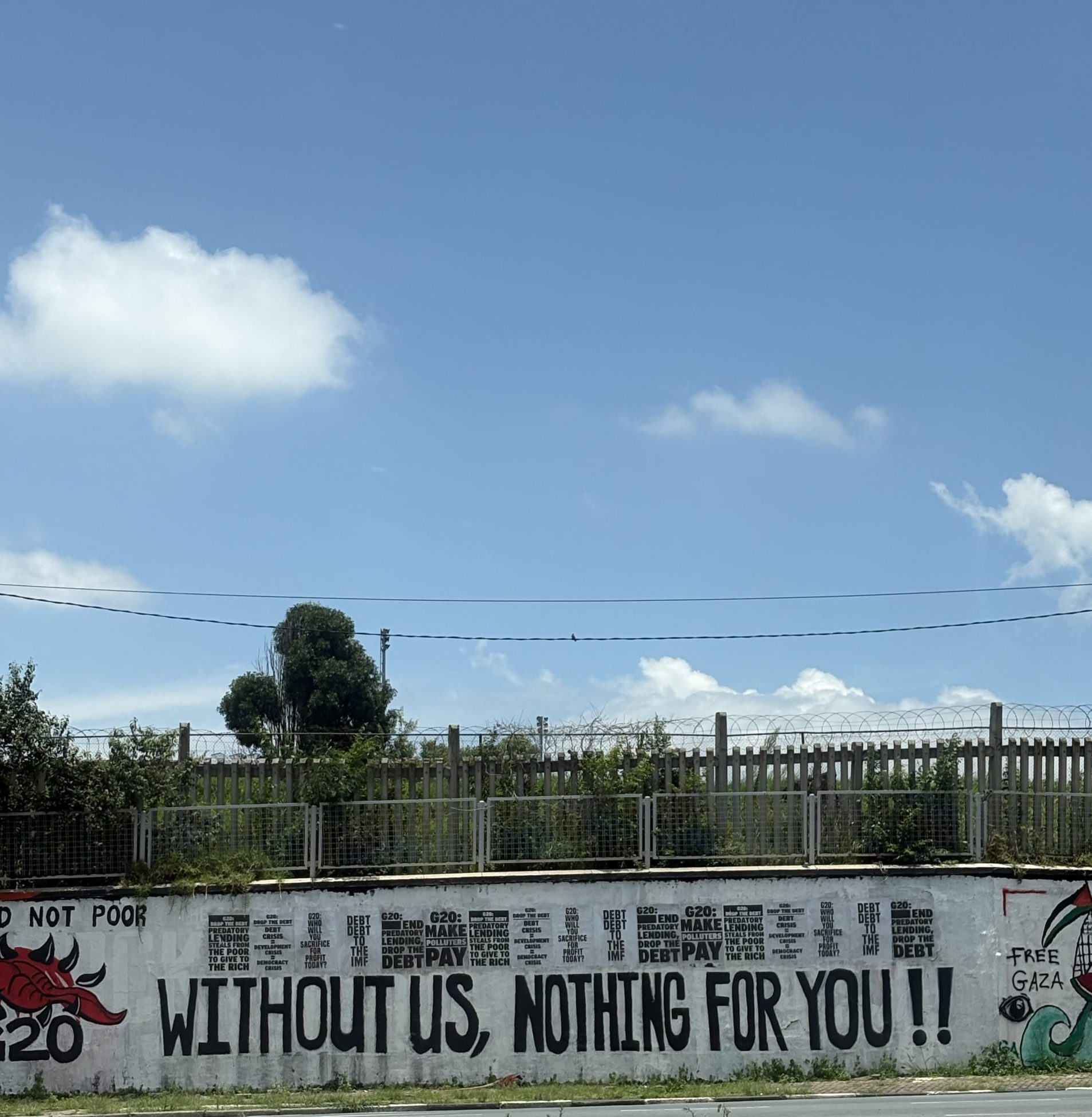
A few weeks ago, I traveled to South Africa and spent most of my time in Johannesburg. While Cape Town is often presented as one of the most beautiful destinations in the country, I chose not to visit it. This decision was not about aesthetics but about discomfort with the broader political, social, and historical context in which beauty is produced and maintained. Travel, especially to places shaped by colonial history, cannot be separated from the systems that continue to structure everyday life. What I encountered in South Africa was not a society that has moved beyond its past, but one in which history remains present, though often reframed as something that has already been resolved.
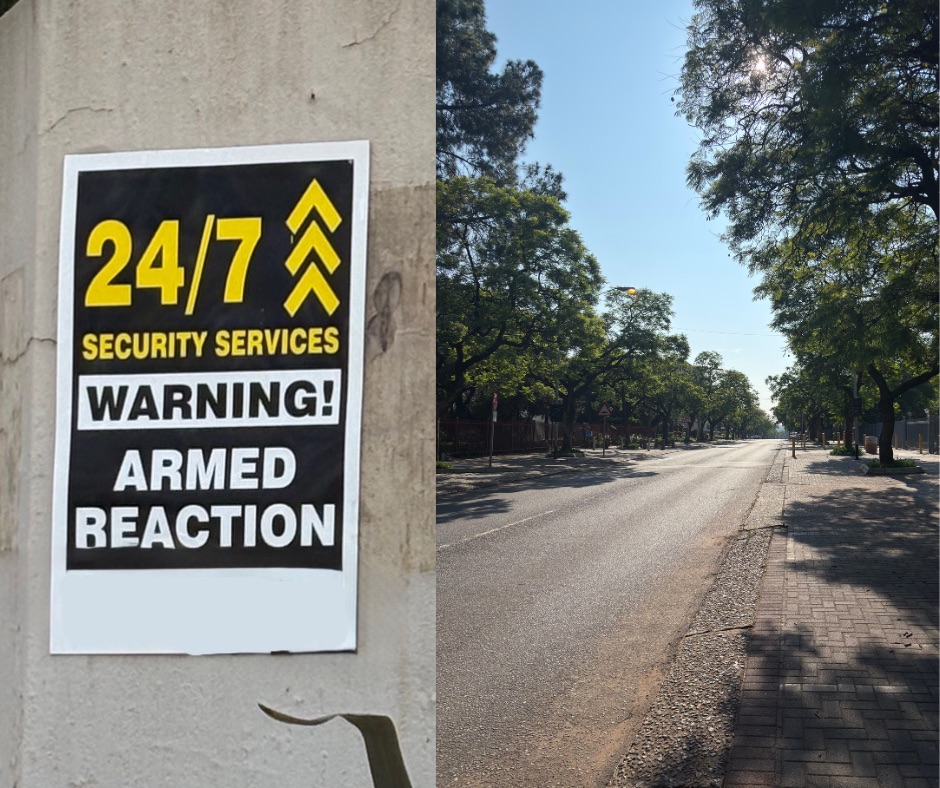
While driving through South Africa, the German word Befremdlich stayed with me throughout the trip. It describes something that feels alienating, disturbing, and difficult to place—a sense that something is profoundly wrong, even if it is not always immediately visible. Unsettled is perhaps the closest English translation. Coming from a country where streets are filled with people walking freely and engaging in daily life, I personally found it deeply disturbing that taking taxis everywhere, rather than walking even short distances, felt necessary.
South Africa is widely known for its extensive memorial culture, including museums such as the Apartheid Museum and sites like Constitution Hill. These institutions play an important educational role and preserve crucial historical narratives. However, the omnipresence of memorialization raises a difficult question: what does it mean to document injustice so thoroughly if the structural conditions that enabled it remain largely intact? The narrative many of us are taught, particularly in European educational systems, is that colonization and apartheid belong firmly to the past. Yet moving through Johannesburg, it becomes clear that racialized inequality continues to shape space, labor, mobility, and access to resources. The system did not disappear; it adapted, becoming less explicit but no less effective.
Johannesburg is a striking example of how space itself carries political meaning. Certain areas are visibly affluent, well-maintained, and overwhelmingly white, while others are predominantly Black and marked by underinvestment and precarity. This division aligns with sociological analyses of colonial and apartheid-era urban planning, which deliberately produced segregated cities to control labor, movement, and political power. These structures did not dissolve with the formal end of apartheid. Instead, they persist through economic inequality, housing patterns, and informal but deeply entrenched forms of segregation. In everyday life, it often appeared to me that Blackness is socially acceptable primarily within specific roles, particularly those involving service or labor for white economic interests, such as transportation, domestic work, or security. Power relations remain racially stratified, even if the language of apartheid is no longer openly used.
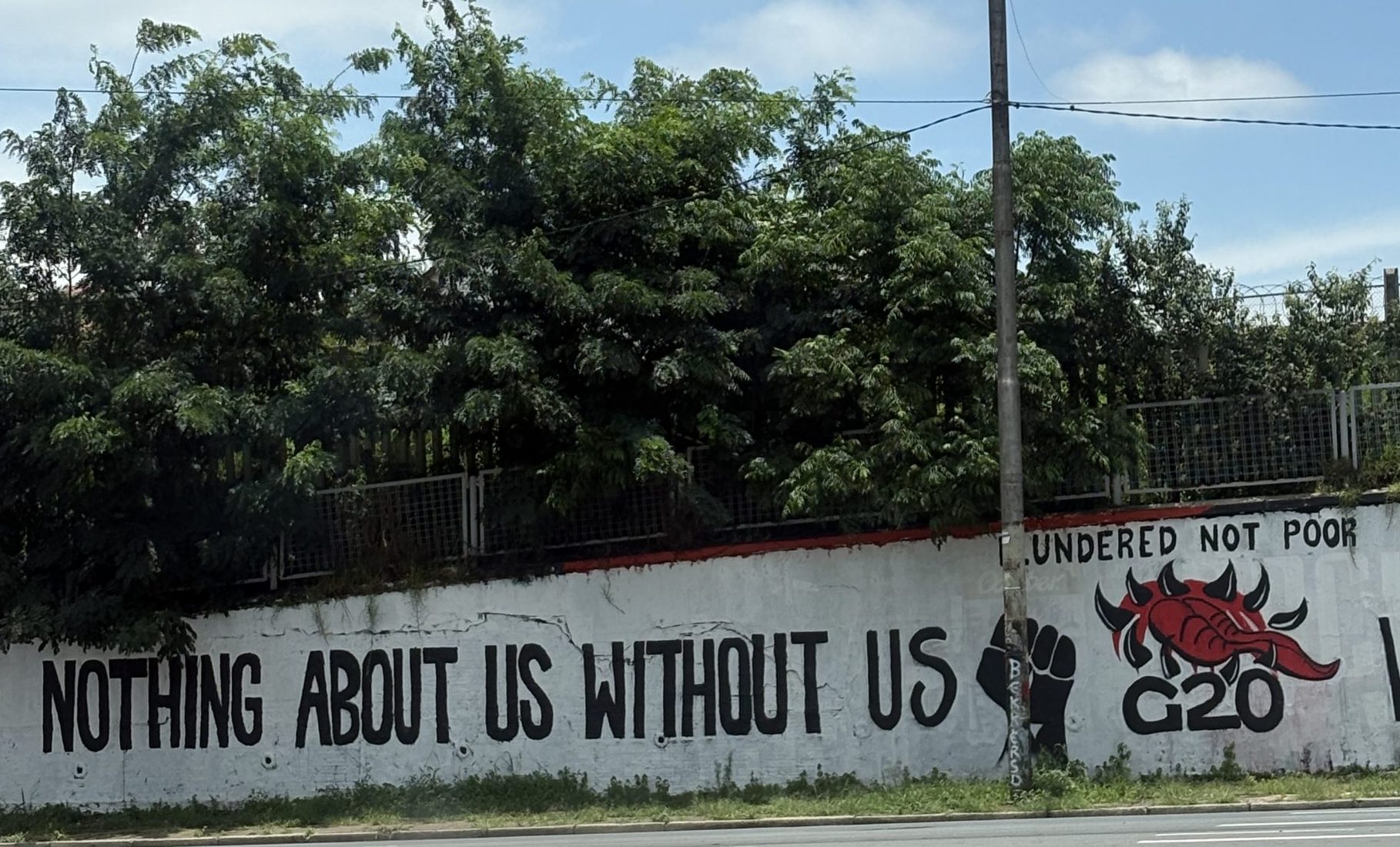
Beyond spatial and economic divisions, the question of cultural presence is equally striking. I struggled to find African food in an African country. European products and cuisines were widely available, from German sausages to British and French items, alongside Indian food, yet local African cuisine was difficult to locate and often met with confusion when asked about. Food is not a minor detail; it is a central carrier of culture, memory, and identity. Its absence points to a deeper form of cultural erasure. Food, language, and daily practices are central components of cultural continuity, and their disappearance or marginalization suggests not a natural evolution but a history of enforced disconnection. Colonization does not only operate through land theft and labor exploitation, it also disrupts cultural transmission, producing generations who are alienated from their own traditions.
After actively searching, what was described as a traditional market appeared less as a celebrated cultural space and more as an isolated zone, frequented almost exclusively by Black people and entirely separate from white-dominated areas. Rather than integration, it conveyed displacement. This raised critical questions about whether African cultural expression is discouraged, rendered unsafe, or systematically excluded from mainstream public life. It is difficult to avoid the conclusion that the effects of colonization, combined with violence, displacement, and prolonged inequality, have deeply fractured cultural memory and visibility.
Identity politics in South Africa further complicate this reality. Many white South Africans claim an African identity while continuing to benefit from systems that protect them from the vulnerabilities faced by Black South Africans. This selective identification allows for cultural belonging without shared risk or marginalization. At the same time, Black Africans often remain excluded from full social and political participation. The contradiction between claimed identity and lived reality highlights how deeply unequal belonging remains. To claim Africanness without confronting the material conditions imposed on Black Africans functions less as inclusion and more as a refusal to engage with historical responsibility.
Issues of policing and authority make these continuities particularly visible. During a taxi ride from Pretoria to Johannesburg, a driver told me about informal or quasi-official groups that stop what he described as primarily Black drivers under the guise of policing. Hearing this was deeply disturbing, as it echoes South Africa’s former pass laws, which controlled where Black people could go and when. Similar systems of racialized movement control exist today in places such as Palestine, demonstrating that such practices are not historical anomalies but recurring tools of domination. When authority reinforces rather than dismantles inequality, history remains active.
Economic status does not shield Black individuals from suspicion. From what I observed, Black wealth is often treated as illegitimate, while Black poverty is criminalized. This creates a situation in which Black people are denied moral legitimacy regardless of their economic position. Such dynamics reveal that racialization operates independently of class and continues to structure how legitimacy and belonging are assigned.
In European contexts, colonization is often presented as a completed historical process, accompanied by moral lessons about tolerance and diversity. However, something so deeply planned, institutionalized, and sustained over centuries cannot simply end without sustained resistance and structural transformation. Structural injustice does not dissolve through acknowledgment alone. Recognition alone is not enough. It requires material change, redistribution of power, and an active confrontation with ongoing inequality. What I witnessed in South Africa is not an isolated failure but part of a global pattern. Similar dynamics are evident in places such as Sudan and Palestine, where colonial and postcolonial systems continue to regulate life, movement, and survival.
South Africa, despite its cultural richness and natural beauty, felt unsettlingly empty to me. This emptiness was not a lack of people or history, but the result of cultural suppression and structural separation. I saw children from Black communities bathing in polluted roadside water and witnessed expired food being sold in supermarkets, while other parts of the city are fortified by weaponized private security and wealth. Inequality is no longer abstract; it is embodied. This reality cannot be explained solely by individual choices or moral failures. It is the outcome of a system that was never fully dismantled. Colonization is not a closed chapter. It is a structure that persists unless actively confronted. Reading history only in the past tense allows its structures to continue unchallenged in the present.
Recognizing this is not about assigning guilt, but about acknowledging responsibility—and especially the responsibility of not looking away.
Author’s Note / Further Context
This text reflects my personal observations and experiences while traveling in South Africa, combined with my personal historical and sociological knowledge. Its purpose is not to make accusations or generalizations, but to share reflections on how colonial and apartheid-era structures continue to shape everyday life.For readers who wish to explore these dynamics further, the National Geographic documentary series Trafficked with Mariana van Zeller, particularly the episode “Assassins”, offers investigative insight into how violence, corruption, and institutional failures intersect in parts of South Africa. This documentary does not represent my personal claims, but it connects to some of the broader systemic issues that informed my reflections and observations during this trip.
